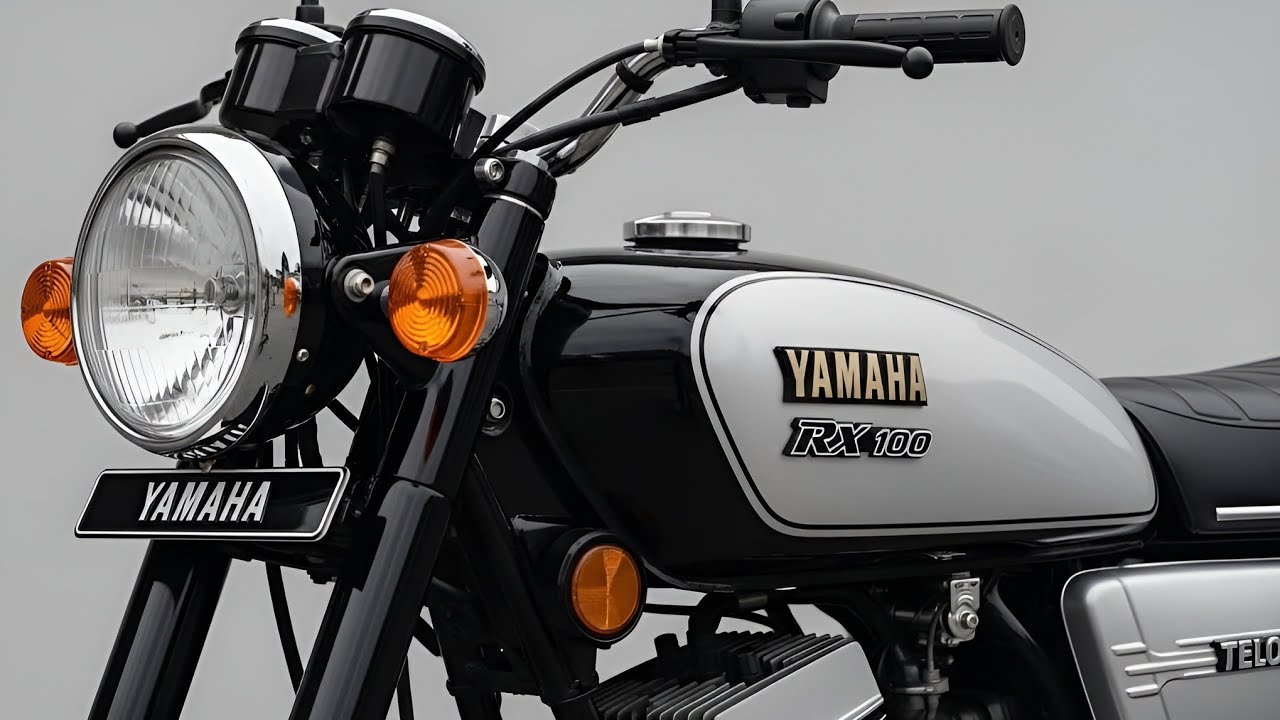
The Yamaha RX100 is one of the most iconic motorcycles ever produced in India. Launched in the mid-1980s, this bike quickly became a favorite among young riders due to its powerful performance, lightweight design, and unique sound. Even today, decades after its production stopped, the RX100 continues to enjoy a cult following.
Introduction and History
The Yamaha RX100 was introduced in India in 1985 by Yamaha in collaboration with Escorts Group. At a time when most motorcycles were designed for fuel efficiency and basic commuting, the RX100 stood out as a performance-oriented bike. It offered a thrilling riding experience, which was rare in its segment.
The bike was powered by a 98cc, two-stroke engine that delivered impressive power for its size. It became especially popular among college students and biking enthusiasts who loved speed and quick acceleration. Production of the RX100 continued until 1996, after which it was discontinued due to stricter emission norms.
Design and Build
The RX100 featured a simple yet attractive design. It had a classic fuel tank shape, flat seat, and chrome-finished mudguards. The bike’s lightweight body made it easy to handle, especially in city traffic.

Despite its basic design, the RX100 had a strong road presence. Its minimalistic look is still appreciated by vintage bike collectors. The build quality was also solid, which is why many RX100 bikes are still seen running smoothly on Indian roads today.
Engine and Performance
The biggest highlight of the Yamaha RX100 was its engine. It had a 98cc, air-cooled, two-stroke engine that produced around 11 bhp of power. While these numbers may seem small today, they were impressive at the time.
The bike was known for its quick acceleration and smooth power delivery. It could easily outperform many larger bikes of its era. The signature exhaust note of the RX100 was another factor that made it special. Enthusiasts still recognize its distinct sound instantly.
Riding Experience
Riding the RX100 was pure fun. Its lightweight frame and responsive throttle made it perfect for both city rides and short highway trips. The bike offered excellent maneuverability, making it ideal for navigating through traffic.
However, the suspension was basic, and the bike lacked modern features like disc brakes or advanced safety systems. Still, riders loved it for its raw and engaging riding experience.
Why It Became a Cult Classic
There are several reasons why the RX100 became a legend:
- Performance: It offered unmatched speed in its segment.
- Sound: Its exhaust note was unique and thrilling.
- Simplicity: Easy to maintain and repair.
- Reliability: Strong engine and durable build.
Even today, many bike lovers restore old RX100 models and keep them as prized possessions.
Legacy and Modern Interest
Although Yamaha discontinued the RX100, its popularity has never faded. There are rumors from time to time about Yamaha bringing back the RX100 in a modern avatar. However, due to emission regulations, it would likely come with a four-stroke engine instead of the original two-stroke.
Collectors and enthusiasts continue to search for well-maintained RX100 bikes. In some cases, restored models are sold at high prices, showing how valuable this motorcycle has become over time.
FAQs about Yamaha RX100
1. Why was the Yamaha RX100 discontinued?
The RX100 was discontinued mainly due to stricter emission norms in India, which made two-stroke engines less viable.
2. What is the mileage of Yamaha RX100?
The RX100 typically offered a mileage of around 25–35 km/l, depending on riding conditions and maintenance.
3. Is Yamaha RX100 still available?
No, the RX100 is no longer in production. However, you can find used models in the second-hand market.
4. Why is the RX100 so popular even today?
Its powerful performance, lightweight design, and iconic sound have made it a favorite among bike enthusiasts.
5. Can Yamaha relaunch the RX100?
Yamaha may relaunch it in a new form, but it would likely feature a modern engine to meet current emission standards.